
Conveyor Systems
Conveyor Corrosion in Coastal Environments: Causes, Risks, and Fixes

Vijay Baid
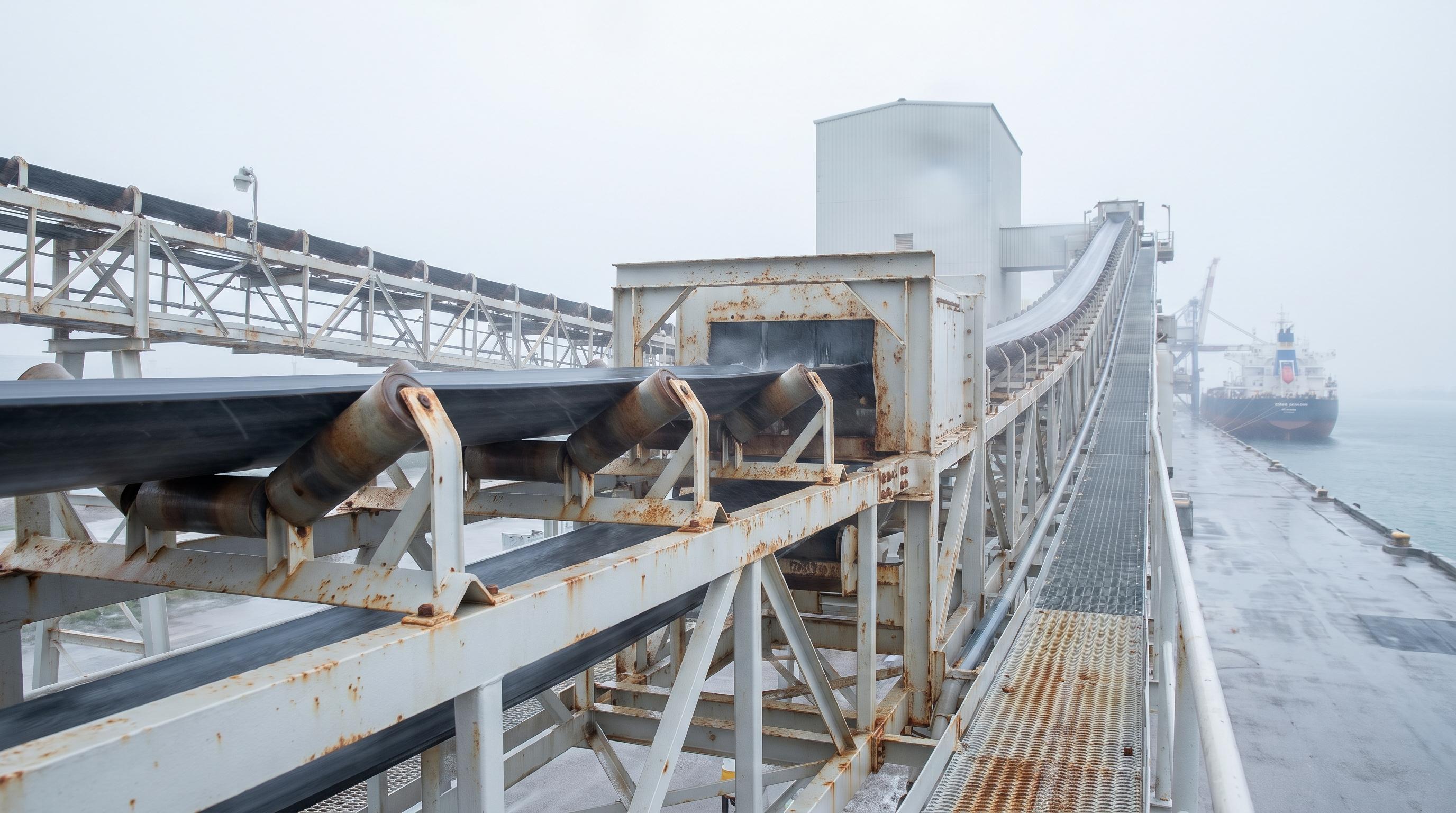
Coastal conveyors rust faster because they are exposed to salt, water, and moisture. Rust can damage rollers, bearings, pulleys, supports, and other parts. This can cause belt mistracking, spillage, higher power use, and downtime. The best solution is to use corrosion-resistant materials, good drainage, proper sealing, and easy maintenance access.
Have you noticed the same conveyor problems coming back again and again? A roller gets stuck. A belt starts mistracking. A pulley needs repair. Rust appears around the supports. You replace the damaged part, restart the conveyor, and expect the problem to be gone. But a few weeks or months later, the same problem comes back.
This is common in coastal plants, ports, fertilizer terminals, and other sites near the sea. The problem may not be the individual part. The coastal environment itself may be damaging the conveyor system.
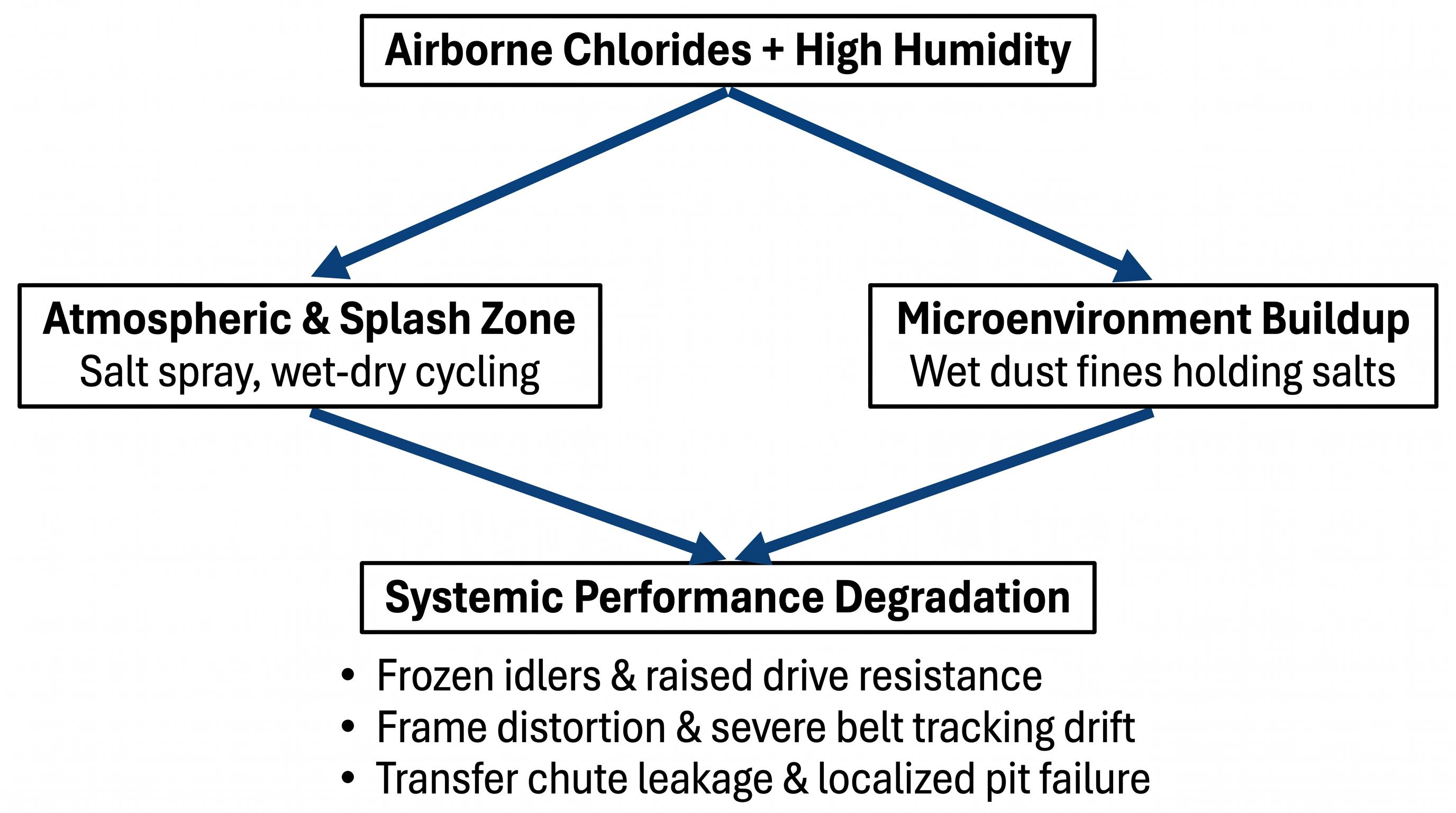
Salt in the air, water from washdowns, high humidity, and repeated wet-dry cycles can make metal parts rust much faster. Over time, this can affect bearings, idlers, pulleys, transfer points, and support structures.
So if your conveyor keeps facing roller failures, belt mistracking, spillage, or unexpected shutdowns, corrosion may be a bigger part of the problem than it first appears.
Why Coastal Conveyors Corrode Faster
Marine and coastal sites are some of the hardest places to run bulk handling equipment. As FHWA notes in its research on marine chloride exposure, corrosion speeds up when salt mixes with moisture and oxygen on metal surfaces.
Conveyors near the sea face more moisture and salt than conveyors in inland areas. When salt, water, and air stay on metal surfaces, corrosion can happen faster.
The problem gets worse when water collects in hidden areas or dust holds moisture against the steel.
That is why coastal conveyors need more than regular rust protection. They need the right materials, drainage, sealing, and maintenance access from the start.
Components Most Affected by Coastal Corrosion
Corrosion can affect the whole conveyor system. But some parts are more likely to show problems first:
1. Idlers, Bearings, and Rotating Parts
When salt spray gets through the idler seals, it can quickly damage the bearing surfaces. This makes the rollers harder to turn and can cause them to stop completely. The conveyor motor then has to work harder to move the belt. A stuck roller can also create flat spots that damage the bottom of the belt.
2. Pulleys, Shafts, and Lagging
Airborne chlorides can get into the gap between the pulley shell and its rubber or ceramic lagging. Corrosion under the lagging can make it bubble and peel off. That leaves the pulley surface uneven, which can lead to belt mistracking and vibration.
Planning a coastal conveyor upgrade? Focus first on the key corrosion-control areas: material selection, sealing, drainage, and retrofit planning for exposed conveyor systems.
3. Transfer Chutes, Skirt Boards, and Fasteners
Transfer points can wear faster because material impact can damage the protective coating. This leaves the steel exposed to salt spray and washdown water. Carbon steel fasteners can also rust quickly. Rust around liner fixing holes can loosen the chute liners, which may cause material blockages, dust, and spillage.
4. Supports, Galleries, and Walkways
Corrosion can weaken trusses, stringers, and other conveyor supports. As the steel becomes thinner, the frame can bend or move under load. This can affect belt alignment and cause mistracking. Corroded grating and handrails can also create safety risks during inspection and maintenance.
Corroded Part | What Happens | What It Can Cause |
|---|---|---|
Idler seals & bearings | Rollers become hard to turn or get stuck | Higher power use and belt wear |
Pulley & lagging | Lagging becomes loose and the pulley surface gets damaged | Vibration and belt mistracking |
Transfer skirt steel | Liners become loose and sealing gaps appear | Spillage, dust, and more wear |
Gallery supports | Steel becomes weak and connections rust | Belt alignment problems and safety risks |
How to Reduce Conveyor Corrosion
The best way to control corrosion is to plan for it during conveyor design, not after problems start.
Coastal conveyors last longer when they use the right materials, good sealing, proper drainage, and easy maintenance access. These features work best when they are part of the original design instead of being added later as quick fixes.
Use the Right Materials and Protection
Protective coatings, galvanized parts, corrosion-resistant fasteners, and suitable materials can help a conveyor last longer in coastal conditions. FHWA’s work on soluble salts on steel surfaces shows why this matters. The right choice depends on the site and the level of salt and moisture exposure. Salt left on steel can also reduce the life of protective coatings.
The goal is not to protect just one part. The full conveyor system should be protected, especially the areas most exposed to salt and moisture.
Improve Drainage and Remove Water Traps
Water should leave the structure quickly. Poor detailing around supports, covers, chutework, and platforms traps moisture where corrosion can stay hidden. Good drainage often does as much for durability as a higher-grade coating.
Protect Transfer Points and Enclosed Sections
Transfer points deserve extra attention because they combine impact, dust, buildup, and moisture. Better enclosure detailing, maintainable sealing, and easier cleanout reduce the conditions that allow corrosion to sit undisturbed. For conveyors already struggling with dust containment and source control, those measures matter as much as corrosion protection.
Plan Maintenance Access Early
Coastal conveyors need regular inspection and cleaning. Maintenance teams should be able to easily reach important parts for washing, inspection, liner replacement, and hardware changes. If a problem area is difficult to reach, it may not be inspected or repaired on time. Easy maintenance access helps plants find corrosion early and prevent small problems from becoming major failures.
When Repairs Are Not Enough
Replacing a rusty or damaged part can get the conveyor running again. But if the same problem keeps coming back, replacing the part again may not be the real solution.
For example, a plant may keep replacing idlers because they are getting stuck. Or the same transfer point may keep showing rust, buildup, or sealing problems. A pulley may need repeated repairs, while corrosion keeps coming back around the conveyor supports. When this happens, the problem may be linked to the way the conveyor was designed for the coastal environment.
Instead of looking at only the damaged part, the plant should review the full area and ask:
Can water drain away easily?
Are the important parts properly sealed?
Are the materials and coatings suitable for coastal conditions?
Are there places where water, salt, or dust can collect?
Can the maintenance team easily reach and inspect these areas?
These checks can help find the real reason behind repeated failures. If the same problem keeps returning after every repair, it is often a sign that the conveyor needs a design upgrade or wider retrofit, not just another replacement. Fixing the root problem can help reduce repeated maintenance, unexpected shutdowns, and long-term operating costs.
Experiencing recurring roller seizures, pulley lagging failure, or structural rust on your coastal bulk handling line?
From the Field: A coastal fertilizer terminal running a 3,500 MTPH ship-loading conveyor faced repeated motor overloads and serious belt mistracking. An inspection showed that more than 30% of the return idlers on the jetty were partly or fully frozen because salt air had passed through the standard lip seals.
Why It Happened: Washdown water carrying dissolved salt was collecting in the idler-set channel frames. The standing salt water damaged the bearing seals and caused corrosion between the carbon steel shafts and frame brackets. Corrosion under the main drive pulley lagging had also caused 40% of the lagging to come loose.
What Changed:
Replaced standard idler frames with hot-dip galvanized assemblies with sloped cross-members to prevent standing water from collecting.
Upgraded all idlers to triple-labyrinth sealed rolls packed with synthetic marine-grade grease.
Re-lagged the drive pulleys using vulcanized ceramic tiles over a 316 stainless steel shell wrap.
Results: Idler failure rates dropped by 85% within the first year, motor power draw returned to design levels, and belt mistracking along the jetty gantry was completely resolved.
Key Takeaways
Coastal and marine sites can hurt conveyor performance long before the main steel structure fails. Salt in the air, high humidity, sea splash, and repeated wet-dry cycles can freeze bearings, damage pulley lagging, weaken support steel, and make the belt mistrack. When the same parts fail again and again, replacing one part at a time stops helping. Better materials, self-draining structures, sealed idler bearings, and stronger transfer enclosures can help the conveyor run more reliably and reduce downtime.
Frequently Asked Questions (FAQ)
Idlers, bearings, pulleys, transfer-point hardware, support steel, and nearby electrical enclosures usually corrode first. These areas collect salt, moisture, and trapped fines, which keeps corrosion active.
Corrosion adds drag, weakens alignment, damages sealing, and lowers system strength. Plants may then see higher power use, more spillage, repeated roller failures, belt mistracking, and longer shutdowns.
No. Covers and enclosed sections help, but they work best with proper drainage, easy-to-maintain sealing, suitable materials, and regular inspection access. Without these, they can trap moisture and buildup instead of controlling it.
A retrofit is often the better choice when the same coastal damage keeps coming back, especially at transfer points, pulleys, supports, or access steel. Repeated repairs usually mean the system detail or layout does not suit the job.
Start with transfer points, idler frames, pulley areas, hidden places where moisture collects, and access steel. Then link what you find to problems like drag, dust leakage, spillage, and repeated shutdown work.