
Conveyor Systems
Conveyor Fire Risk Reduction: Simple Engineering Controls

Vijay Baid
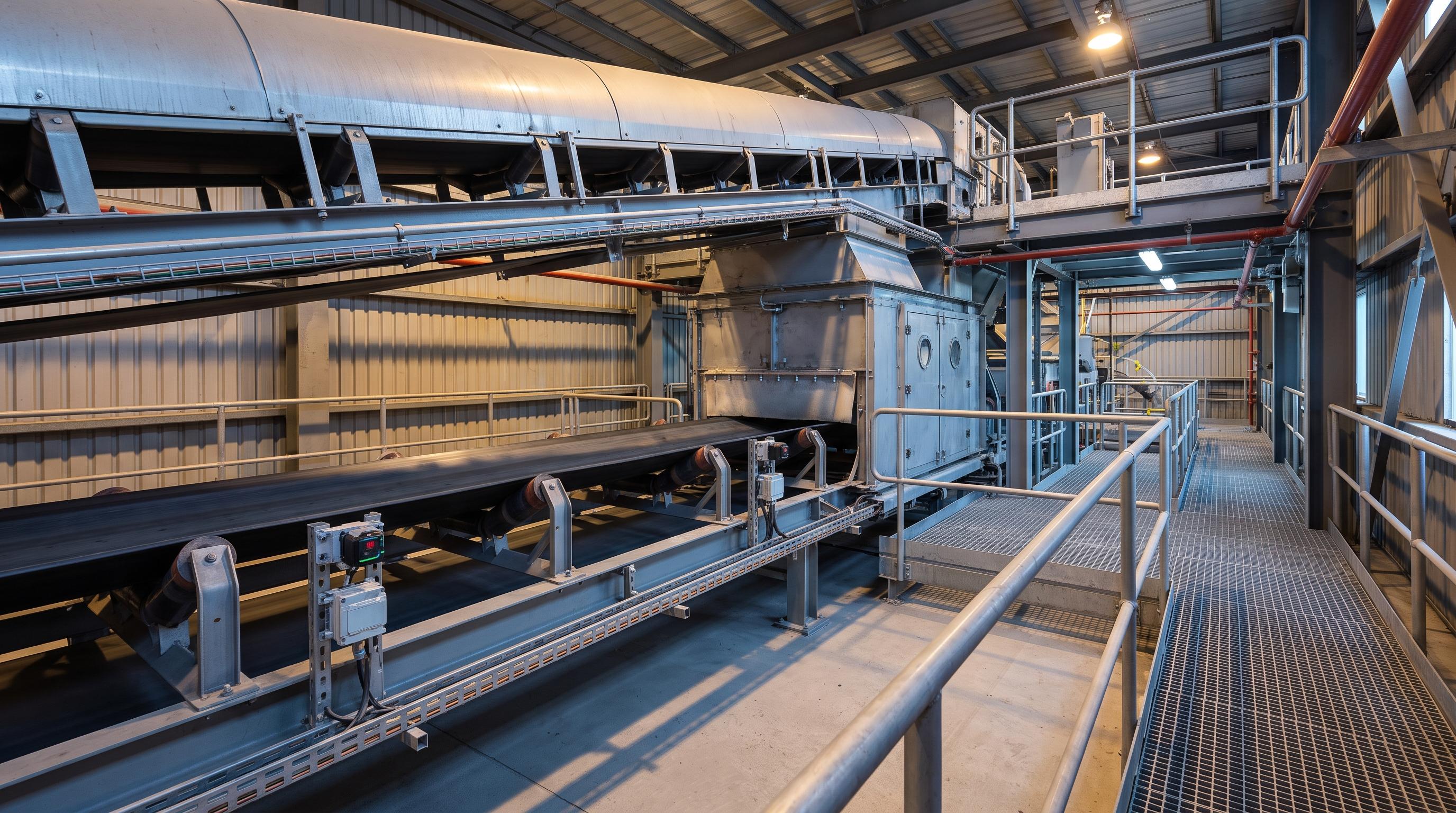
TL;DR: Conveyor fires often start with small problems such as belt slip, seized idlers, belt mistracking, overheating, or dust buildup. If these problems are not found early, the heat can ignite nearby dust, spilled material, or carryback. A safer conveyor system controls these risks from the start. Good transfer-point design, dust control, belt tracking, temperature monitoring, and automatic shutdown systems can reduce fire risk and prevent costly downtime. The goal is simple to stop the heat, control the dust, and detect problems before they become a fire.
A conveyor can run for months without a major fire while still building up small warning signs. Maybe an idler is getting hotter than normal. Maybe the belt is rubbing against the structure. Maybe material is collecting under the return belt. Or maybe a transfer point is releasing more dust than it should. Each problem may look small on its own. But together, they can create a dangerous chain:
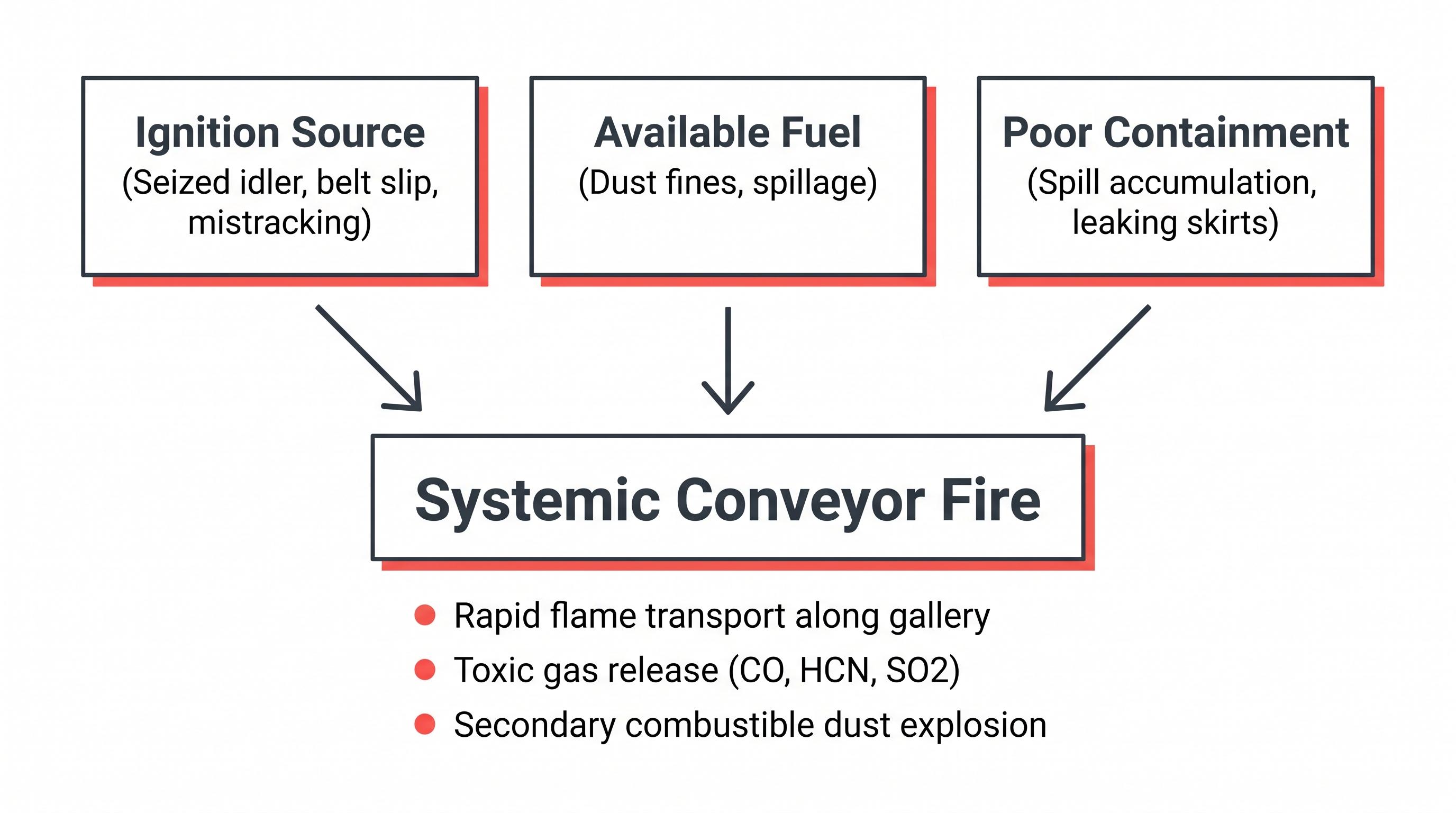
Belt slip or seized idler → friction → heat → dust or spilled material → fire risk
The problem is that these warning signs are often treated as normal maintenance issues. Replacing one damaged idler may fix the immediate problem. Cleaning spilled material may remove the buildup for a few days. But if the same problem keeps coming back, the conveyor may have an underlying design or control issue.
That is why fire prevention should start with controlling the conditions that create heat and combustible dust, not only with fire-fighting equipment.
Why Conveyor Fires Happen
Most conveyor fires need three things:
A source of heat
Something that can burn
Enough time for the problem to grow
On dusty bulk material conveyors, the heat may come from a seized bearing, slipping belt, belt mistracking, or mechanical friction. The fuel may be coal dust, biomass dust, spilled material, or carryback. If the problem is not detected quickly, the heat can spread to nearby material and start a fire.
This is why conveyor fire prevention is closely linked to mechanical reliability, dust control, and early detection.
The 4 Conditions Behind Most Conveyor Fires
A conveyor fire usually needs more than one problem. In most cases, heat, combustible material, poor control, and a slow response come together to create the risk. Understanding these four conditions helps plant teams find problems early and prevent them from turning into a fire.
1. Ignition Source: Where Does the Heat Come From?
The first step is finding what can create enough heat to start a fire.
Common sources include:
Seized idlers: A roller stops turning while the belt keeps moving over it, creating friction and heat.
Overheated bearings: A damaged or poorly lubricated bearing can become very hot during operation.
Belt slip: If the belt slips on the drive pulley, friction can quickly increase the belt and pulley temperature.
Belt mistracking: A belt running against the conveyor frame can create continuous friction.
Electrical or drive problems: Faults in motors, drives, or electrical parts can also create heat.
These problems may start small, but if the conveyor keeps running, the heat can continue to rise.
2. Combustible Material: What Can Catch Fire?
Heat alone is not enough. There must also be material nearby that can burn.
In bulk handling plants, this may include:
Coal dust
Biomass dust
Spilled material
Belt carryback
Other fine combustible material
Fine dust can be especially difficult to manage because it can settle in areas that are hard to see or clean. As OSHA notes in its combustible dust guidance, finely divided combustible material can become explosible under the right conditions. The more combustible material that collects near a heat source, the higher the fire risk.
3. Poor Dust and Material Control: Where Does the Fuel Build Up?
Even when the conveyor is working normally, dust and material can escape from transfer points, loading areas, idlers, pulleys, and return belts. Poor sealing, weak skirting, and poor belt cleaning can allow material to build up over time. For example, carryback under the return belt can collect near pulleys or idlers. If one of these parts starts overheating, the built-up material can provide fuel for a fire.
Good dust and material control should therefore focus on:
Better transfer-point sealing
Proper belt skirting
Effective belt cleaners
Carryback control
Regular inspection and cleaning
Keeping combustible material away from heat sources is a key part of fire prevention.
4. Delayed Response: What Happens When a Problem Is Missed?
A small conveyor problem can become serious when it is not detected early. For example, a bearing may start heating up, or a belt may begin slipping. If there is no sensor, alarm, or automatic shutdown, the conveyor may continue running while the problem gets worse.
Early warning systems can help detect conditions such as:
High bearing temperature
Belt slip
Belt mistracking
Abnormal heat
Other critical conveyor faults
The system can then alert the operator or stop the conveyor before the problem becomes more serious.
If you are reviewing conveyor fire exposure across transfer points, return-side buildup, and abnormal heat conditions, a technical spec sheet can help your team compare control options more clearly. It gives maintenance, projects, and reliability teams a practical starting point for evaluating the right containment, monitoring, and shutdown measures for the conveyor line.
Engineering Controls to Reduce Conveyor Fire Risk
1. Stop Heat and Friction Before They Become a Fire Risk
One of the most effective ways to reduce conveyor fire risk is to stop abnormal heat before it builds up. A seized idler is a common example. If the roller stops turning while the belt keeps moving, the belt continues rubbing against the roller. This creates friction, which can quickly produce heat. A mistracking belt can create a similar problem. If the belt runs against the conveyor frame, continuous rubbing can damage the belt and create another source of heat.
To reduce these risks:
Inspect idlers and bearings regularly.
Keep the belt properly aligned.
Monitor belt slip at the drive pulley.
Check for unusual temperature increases.
Replace damaged or seized components quickly.
Select belts and conveyor parts that match the material and operating conditions.
The goal is simple: find and remove the source of heat before it can ignite nearby material.
2. Keep Dust, Spillage, and Carryback Under Control
In a bulk handling plant, dust is more than a cleaning problem. Fine combustible dust can become fuel when it collects near a heat source. Spilled material and belt carryback can create the same risk. Material may collect under the return belt, around pulleys, or near transfer points. If a nearby bearing or idler starts to overheat, this buildup can make the situation worse. Good conveyor design should control material before it spreads through the system.
Useful controls include:
Proper belt skirting
Good sealing around transfer points
Effective belt cleaners
Return belt ploughs
Enclosed transfer areas
Easy access for cleaning and inspection
Regular cleaning is still important, but the better approach is to reduce the amount of dust and material that escapes in the first place. Less buildup means less fuel around possible heat sources and lower fire risk.
3. Design Transfer Points to Control Dust and Spillage
Transfer points are one of the most important areas to control because material changes direction and speed as it moves from one conveyor to another. If the material enters at the wrong angle or falls from too high, it can create more dust and push material outside the belt.
Poor transfer-point design can lead to:
Dust escaping into the work area
Material spilling from the belt
Carryback
Material buildup
More cleaning work
Higher fire risk
A well-designed transfer point should guide the material smoothly onto the receiving belt.
Key design factors include:
Chute shape
Material flow
Belt loading
Skirting
Sealing
Drop height
Access for cleaning
When these features work together, the transfer point can reduce dust, spillage, buildup, maintenance, and fire risk.
4. Detect Problems Early and Stop the Conveyor
Even a well-designed conveyor can develop problems during operation. The key is to detect them before they become serious. Sensors can monitor important conveyor conditions such as:
Bearing temperature
Belt speed
Belt slip
Belt mistracking
Abnormal heat
Chute blockage
When a dangerous condition is detected, the system can alert the operator or stop the conveyor automatically.
Practical Conveyor Fire-Prevention Checklist
Use this quick checklist to find common fire risks before they become serious problems:
Check for belt mistracking, edge wear, and rubbing marks.
Check idlers, pulleys, and bearings for overheating, seizure, or unusual noise.
Check for belt slip, especially during startup and heavy loads.
Inspect transfer points for dust, spillage, carryback, and buildup.
Check that cleaners, ploughs, and skirting are working properly.
Test emergency stops and automatic shutdowns.
Look for dust and spilled material in enclosed areas and hard-to-reach spots.
Check for hot-work and other ignition sources near the conveyor.
Make sure guards and access areas allow safe inspection and maintenance.
If the same heating, slipping, or buildup problem keeps coming back, don't just clean or replace the part again. Find and fix the engineering problem causing it.
If your plant is seeing repeated carryback, belt slip, overheating, or dust escape at transfer points, it usually points to a deeper engineering gap rather than a one-time maintenance issue. A focused system review can show where design, containment, tracking, or shutdown controls need to be corrected before the same risk returns.
Final Takeaway
Conveyor fire risk reduction does not begin with an alarm panel. It begins with better engineering around heat, dust, spillage, and abnormal running conditions. Plants that control those basics build safer conveyors and more reliable operations at the same time.
If a conveyor is showing repeated signs of leakage, carryback, mistracking, or overheating, the system is already telling you where the fire risk lives. The right response is not another temporary fix. It is a design-led correction that removes the hazard at its source.
Frequently Asked Questions (FAQ)
The most common cause is a combination of friction and fuel. In practice, that usually means mistracking, seized rolls, belt slip, or overheated components happening in areas where dust, spillage, or carryback have been allowed to build up.
No. Cleaning helps, but it does not remove the root causes of heat generation. If the conveyor keeps leaking material, slipping, or running out of alignment, the fire risk will return even after cleanup.
Conveyors handling dusty, combustible, or heat-sensitive materials usually need closer review. Enclosed conveyors, long galleries, and systems carrying coal, petcoke, biomass, or fine recycled materials often justify stronger monitoring and containment measures.
Start with transfer points, return-side build-up, tracking condition, belt slip history, and rotating components that can overheat. Those areas reveal whether the conveyor is creating the conditions that allow a fire to develop.