
Dust Control
From Dust to Durability: Solving the Industry’s Oldest Conveyor Problem

Vijay Baid
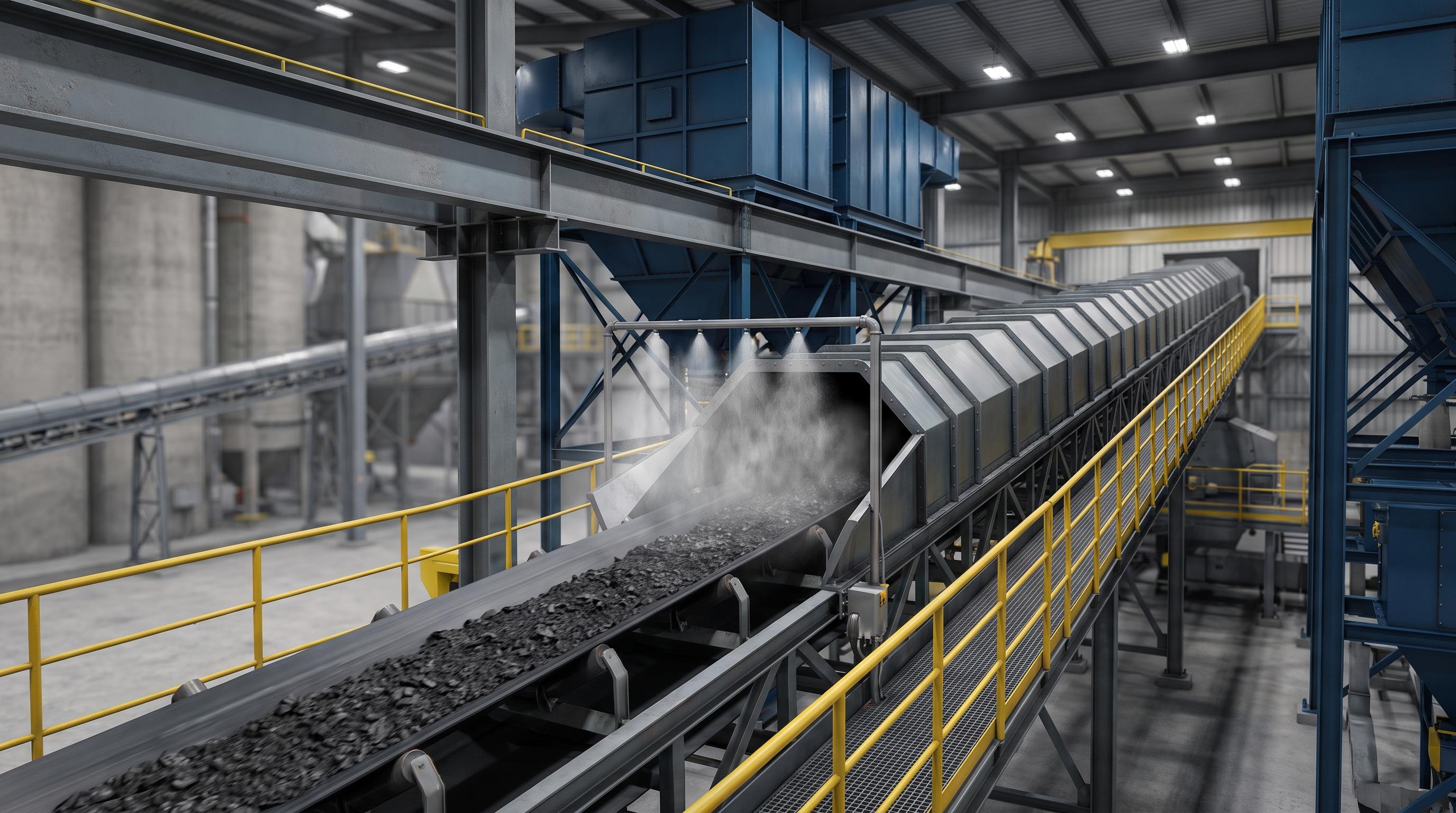
Conveyor dust is usually a transfer-point control problem. The most durable fix is to guide the material stream, support the belt under the sealing line, and keep the enclosure tight so dust and spillage stay contained at source. When those basics hold, plants cut wear, cleanup, and repeat maintenance at the same time.
The oldest conveyor dust problem is usually solved at the transfer point, not after the dust escapes. Plants get durable dust control when they reduce free-fall, guide the material stream, support the belt under the seal line, and keep the enclosure tight. When those basics are right, dust drops, spillage falls, and component life improves.
That is why this is not just a cleanup issue. Conveyor dust is often the first visible sign that the transfer point is losing control of the material stream and the air moving with it. Once that happens, fines escape, wear rises, and the same area starts demanding repeated attention from operations and maintenance.
The most reliable fix is source control. Better chute geometry, stable belt support, effective sealing, and enclosed sections do more for long-term performance than chasing dust after release.
Why conveyor dust starts at the transfer point
Transfer-point control decides whether dust stays contained or escapes into the plant. As bulk material falls from a chute, hopper, or upstream belt, it pulls air with it. When that stream lands on the receiving belt, impact throws fines into suspension. The displaced air then pushes them toward the nearest opening.
If the loading zone is not sealed well, or if the belt sags away from the skirting, the dust escapes at once. That is why transfer-point performance matters far beyond cleanliness. The same conditions that create dust also create spillage, mistracking, impact wear, and unstable loading.
Dust is often the first visible sign that the transfer point is not doing its job properly. In shutdown inspections, the first clue often shows up in the wear pattern inside the chute or where the belt has sagged away from the seal line.
The same transfer-point weaknesses that release dust usually show up as material spillage at transfer points as well, especially when the stream is off-centre or the skirt seal opens under load.
What usually creates dust in a conveyor system
Dust is usually caused by flow, air, and sealing problems working together. It rarely comes from one isolated fault.
Excess drop height: more free-fall means more impact energy and more airborne fines.
Poor material trajectory: when the stream is not guided well, material spreads, bounces, and loads the belt unevenly.
Weak enclosure sealing: dust-laden air escapes through the easiest available gap around skirtboards, joints, and access points.
Belt sag in the load zone: even good skirting cannot seal well if the belt drops away between support points.
Turbulence inside the chute: unstable internal flow increases both air movement and wear.
These issues show up across cement, mining, aggregates, and other bulk-material sectors because the mechanics are the same. The NIOSH Handbook for Dust Control in Mining describes conveyor transfer points as major dust sources and highlights containment and control at the transfer point as a primary response.
Why dust control and durability are tied together
The same design choices that contain fines also reduce wear. A transfer point that controls the material stream well places less shock on the belt, reduces side loading, limits contamination around rotating parts, and helps wear surfaces last longer.
Transfer-point condition | What the plant sees | What it leads to over time |
|---|---|---|
High free-fall and poor trajectory | Dust bursts, bounce, unstable loading | Higher wear and repeated cleanup |
Weak sealing at the skirt line | Lateral dust leakage and fines on walkways | Spillage buildup and more maintenance attention |
Belt sag under the load zone | Seal gaps and edge leakage | Shorter skirting life and recurring dust problems |
Unprotected internal wear areas | Rapid liner deterioration | Flow changes, more turbulence, and repeat failures |
Poor containment around dusty duty | Dust spread across nearby structures | Lower component life and greater housekeeping burden |
What enclosed conveyor sections do better
Enclosed sections give dust less chance to escape. They create a defined space that contains displaced air and airborne fines. In open layouts, dust moves straight into the plant or gets picked up by wind. In enclosed sections, the system has a better chance to keep fines within the conveying path and guide them toward the right control points.
That lines up with OSHA guidance on conveyor ventilation, which emphasizes enclosing transfer points and using exhaust control around dusty belt transfers so dust is managed where it is generated rather than after it spreads through the plant
That does not mean any enclosure works on its own. The enclosure still has to match stable belt support, good skirt sealing, and a transfer design that does not create extra turbulence.
Better source containment: dust stays closer to where it is created.
Less spread: fine material is less likely to coat nearby structures and equipment.
Lower exposure: walkways and galleries stay cleaner and safer.
More component protection: abrasive service does less damage to nearby parts.
This matters most in heavy-duty industries where dust, abrasive material, and weather exposure all shorten service life.
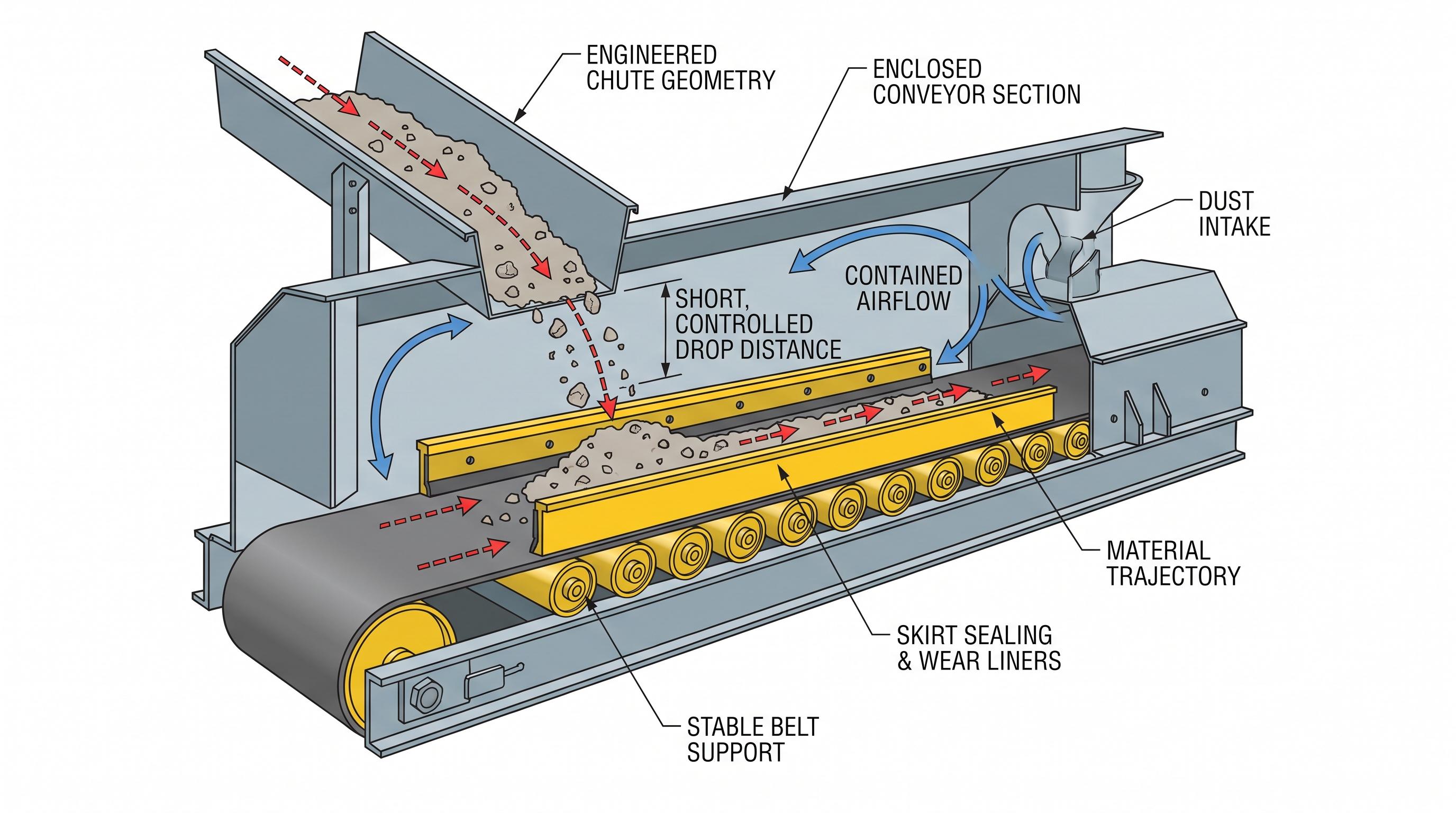
What a durable low-dust transfer point looks like
A durable transfer point keeps the stream under control from discharge to loading. The material is guided, not dropped blindly. The belt is supported, not left to sag. The enclosure is sealed, but still easy to inspect and maintain.
Engineered chute geometry
Good chute geometry controls the stream. The material should land in the direction of belt travel and near the centre of the receiving belt. That reduces impact turbulence, lowers edge loading, and helps keep fines contained.
Controlled drop height
Shorter drops mean less dust and less damage. Reducing free-fall lowers impact energy. Better-directed material paths usually produce cleaner, steadier transfer conditions.
Continuous belt support in the load zone
The seal only works if the belt stays stable. If the belt drops between support points, the seal opens up and dust escapes even when the skirting is in acceptable condition.
Effective skirt sealing
Skirting has to seal without fighting the belt. It should maintain contact without causing excessive belt wear. It also has to stay adjustable and serviceable because dusty service is never static.
Wear protection that preserves the flow path
Wear protection should hold the intended geometry. Internal liners and high-wear surfaces need to protect both the housing and the flow path. Once wear changes the shape inside the transfer point, dust, turbulence, and material spread usually rise again.
Field rule: if a transfer point needs constant skirt adjustment, frequent cleanup, and repeated maintenance attention, the issue is usually bigger than worn sealing alone.
Common signs that the conveyor is losing control of dust
Most weak transfer points show the same warning signs. Plants usually see them long before a formal review begins.
Dust is concentrated around one transfer point instead of across the full line.
Fines collect along the outside of skirtboards or beneath the load zone.
The belt runs with repeated side loading or mistracking after the transfer.
Rollers, bearings, and nearby parts in that area fail faster than expected.
Housekeeping demand rises again soon after each cleanup cycle.
When these symptoms appear together, the plant usually gains more from a transfer-point review than from adding one more isolated dust-control device.
Fines along the outside of the skirtboards are often treated as a sealing failure, but the more decisive evidence is usually inside the transfer section. An off-centre stream, polished wear on one side, and belt movement under the skirting line point to loss of loading control before the dust ever reaches the seal edge.
What plant teams should review first
Start with the transfer point as a system. The key checks are simple, but they reveal where control is being lost.
Check point | What to look for | Why it matters |
|---|---|---|
Material trajectory | Is the stream centred and moving with belt direction? | Poor trajectory increases dust, bounce, and spillage. |
Drop height | Is there unnecessary free-fall into the load zone? | Higher drop increases impact and airborne fines. |
Belt support | Does the belt stay stable beneath the sealing line? | Belt sag opens leakage paths. |
Enclosure sealing | Are there visible gaps, worn joints, or leakage paths? | Dust escapes through the weakest opening. |
Internal wear | Have worn surfaces changed the flow path? | Wear can bring dust and turbulence back even after earlier fixes. |
That review usually shows whether the right answer is a local retrofit, a sealing and support upgrade, or a more complete redesign of the transfer section. For teams lining up a shutdown scope or comparing options across maintenance, operations, and procurement, the specification sheet is a useful starting point.
How this applies across cement, mining, and bulk-material handling
The material changes by sector, but the operating demands stay similar. Cement plants deal with highly dusty fine materials and strict cleanliness expectations. Mining and quarrying operations combine dust with impact, abrasion, and variable lump sizes. Other bulk-material plants may face weather exposure, long conveyors, or many transfer stages that magnify the effect of one weak zone.
In each case, the most reliable answer is the same: control the transfer point, keep the enclosure tight, and make sure the conveyor structure supports that control over time.
In cement duty, the same failures often grow into a wider plant-level issue across transfer houses, silo feed lines, and dispatch circuits. That is why many teams review them alongside dust emission control in cement plants.
How UGESL approaches conveyor dust problems
UGESL starts with material mobility, not isolated product selection. The focus is on how material enters the transfer point, how the stream behaves under operating conditions, where the enclosure is losing control, and which parts of the conveyor are taking avoidable wear because of it.
That leads to more durable results. In some plants, the right move is better transfer geometry and containment. In others, the main need is stronger support through the load zone, better sealing, or a tougher retrofit for abrasive duty.
What retrofit reviews usually uncover
What looks like a skirting problem from outside often proves to be a loading problem once the enclosure is opened. When the stream is off-centre, fines cut one side harder than the other, and the seal line has no stable belt surface to work against, replacing the skirting alone rarely changes the failure pattern for long.
The wear pattern inside the enclosure usually gives the clearest technical evidence. Heavier polishing on one chute wall, repeated buildup in one corner, faster liner loss at one impact area, or dust concentrated at one exit path usually indicate that the internal flow path has shifted and the transfer point is no longer controlling material and air evenly.
In high-impact mining duty, an engineered transfer chute has to control material trajectory and wear at the same time. If it does not, dust, blockage, and liner damage start feeding each other.
When a retrofit is enough and when a redesign is better
Use a retrofit when the layout is sound and the failure is local. That is often the case when the dust problem comes from worn skirting, missing enclosure sections, or weak support under the seal line.
Choose a redesign when the transfer point keeps failing in the same way. That is usually the better option when the zone shows poor material trajectory, chronic edge loading, excessive turbulence, or dust and spillage that return after every short-term fix.
A simple rule helps: if maintenance keeps correcting the symptoms at the same location, the geometry or support conditions at that transfer point probably need a closer look.
Key takeaways
Conveyor dust usually starts at the transfer point, where poor material trajectory, excess free-fall, unstable air movement, and weak sealing work together.
The most reliable long-term fix is source control: engineered chute geometry, belt support under the skirting line, effective sealing, and enclosed sections that hold containment.
Dust control and durability are linked, because the same conditions that release fines also accelerate wear, spillage, mistracking, and repeated maintenance.
If one transfer point keeps needing cleanup, skirt adjustment, or component replacement, the plant usually gains more from a transfer-point review than from another isolated patch fix.
Frequently asked questions
The most effective way to reduce conveyor dust is to control it at the transfer point. That means guiding the material stream, reducing free-fall, supporting the belt under the seal line, and keeping the enclosure tight under real operating conditions.
No. Enclosed conveyors improve containment, but they do not fix a weak transfer point by themselves. If the stream is unstable or the belt sags under the sealing line, dust can still escape inside or beyond the enclosure.
They usually come from the same transfer-point weaknesses. Poor trajectory, unstable loading, and weak sealing can let fines escape as dust while larger material escapes as spillage.
If dust returns quickly after skirting replacement, the problem may not be the skirting alone. Belt sag, weak support, high turbulence, or a badly controlled material stream can reopen the same failure pattern.
A plant should consider a review when one transfer point repeatedly creates dust, spillage, fast wear, or extra maintenance attention. Those symptoms usually point to a design or operating issue that needs a broader look.