
Conveyor Systems
Grain Handling Conveyor Design: How to Reduce Product Damage

Vijay Baid
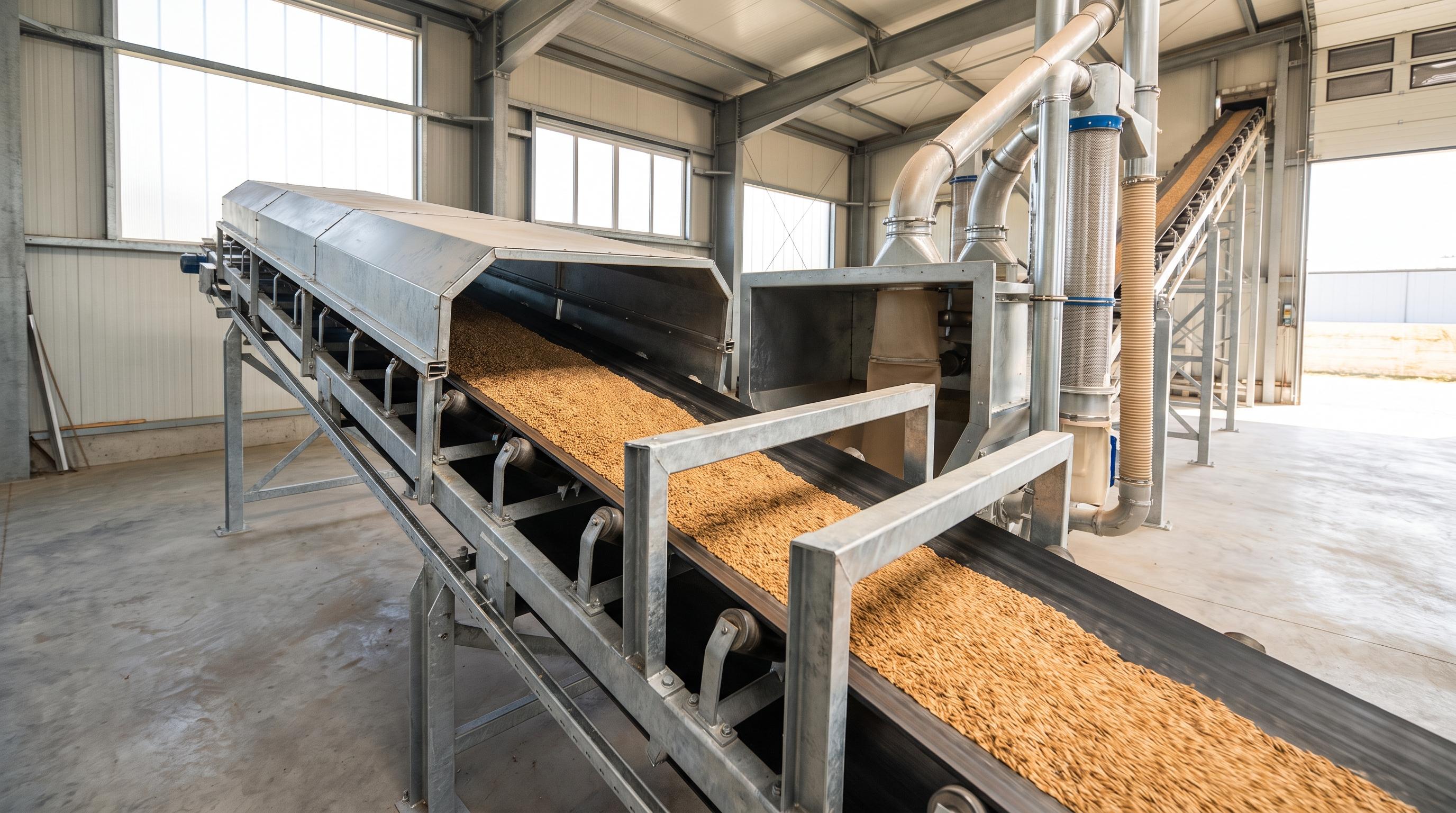
TL;DR: Grain conveyors must move a lot of grain, but they must do it gently. If the belt runs too fast, loads the grain unevenly, lets it fall from too high, or uses a poor transfer chute, kernels can break, dust can rise, and grain can be lost. The conveyor also needs good belt support, correct idler spacing, and proper cleaning so grain keeps moving well. The goal is not just to meet the required TPH. The goal is to move grain with less impact, less spillage, less dust, and less product damage, while keeping the conveyor reliable and easy to maintain.
Grain handling conveyor design can improve throughput and still quietly damage product. You may not notice the problem while the line is running. But later you may see more cracked kernels, broken grain, dust, and product loss during storage, cleaning, or processing.
The damage often starts at the transfer point. Grain may fall too far, hit the belt too hard, or strike chute surfaces at the wrong angle. A belt that runs too fast can make that impact worse.
Even a small rise in grain damage affects product quality, cleaning losses, storage performance, and final value. The fix is not simply to slow the belt. The better approach is to review the full grain flow and remove unnecessary impact at each stage. This means choosing the right belt speed, loading method, transfer chute, and discharge setup so grain moves smoothly and safely, with as little damage as possible.
Why Grain Handling Conveyor Design Needs Gentle Handling
In grain handling conveyor design, the material behaves very differently from coal or crushed stone. Grain kernels crack and split more easily under repeated impact. USDA says physical damage after harvest can lower grain quality and make grain more likely to be damaged during storage. See USDA ARS guidance on minimizing quality losses in grain handling and storage.
Damage can happen when grain:
Falls from a high height
Hits hard chute or conveyor surfaces
Enters the belt at the wrong angle
Gets caught between moving parts
Passes through too many transfer points
Moves at a speed that is too high
These problems may seem small while the conveyor is running, but repeated impact can cause more broken kernels, dust, grain loss, and extra cleaning. So a good grain conveyor must balance capacity with gentle handling. It should move the needed amount of grain while keeping impact, sharp direction changes, and extra handling as low as possible.
6 Key Conveyor Design Factors That Reduce Grain Damage
1. Control Conveyor Speed
Conveyor speed has a direct effect on how grain moves through the system. A belt running too fast can increase impact at loading and discharge points. It can also make grain bounce, scatter, or hit chute surfaces harder.
Instead of simply choosing the highest possible belt speed, select a speed that meets the required capacity while keeping grain movement controlled. The goal: Move the required amount of grain without creating unnecessary impact.
2. Keep Grain Loading Centered
Grain should enter the conveyor near the center of the belt.
Off-center loading can cause the material to move toward one side. This can lead to:
Belt mistracking
Spillage
Uneven loading
More contact with skirts and chute walls
A properly designed loading area should guide grain smoothly onto the belt and spread it evenly across the carrying surface. Centered loading protects both the grain and the conveyor.
3. Reduce Drop Height at Transfer Points
Transfer points are one of the most important areas to review when trying to reduce grain damage. When grain falls from one conveyor to another, a large drop creates more impact. The grain can hit the belt, chute, or other kernels at high speed. Instead of allowing grain to fall freely from a high point, use transfer chute designs that guide the material and reduce its drop height. That also aligns with OSHA’s grain-handling guidance on minimizing free-fall distances and controlling dust leakage.
A smoother transfer can reduce:
Kernel breakage
Dust
Spillage
Chute wear
Better Transfer Point Design
The chute should guide grain in the same general direction as the receiving belt. This reduces sudden changes in speed and direction.
Less impact = less grain damage.
4. Use the Right Belt and Idler Setup
The belt and its support system also affect grain handling. A belt that is properly supported provides a more stable surface for the grain. Correct idler spacing can help maintain the belt shape and reduce unnecessary movement. The conveyor should also use a belt surface that provides good grip without creating unnecessary impact or buildup.
For grain handling, the design should consider:
Belt width
Belt speed
Idler spacing
Belt tension
Loading conditions
Grain type and moisture
These factors should be selected together rather than treated as separate components.
5. Avoid Too Many Transfers
Each transfer point gives grain another chance to get hit and damaged. If a grain handling system uses many short conveyors with many transfer points, the grain may be handled again and again before it reaches the end.
Where practical, a system can reduce product damage by:
Using longer conveyor runs
Reducing unnecessary transfers
Designing smoother transitions
Keeping discharge heights low
Fewer transfers can mean less handling and less product damage.
6. Keep the Conveyor Clean
Grain dust and small particles can collect around the conveyor.
Poor cleaning can lead to:
Product contamination
Dust buildup
Belt carryback
Blockages
Pest problems
Increased maintenance
Scrapers and belt cleaners should remove material without harming the belt or causing extra impact. Transfer points should also be easy to check and clean. In food and grain plants, easy cleaning should be part of the conveyor design from the start, not added later. This matters for hygiene and dust control. That is why OSHA’s grain handling facilities standard is a useful guide when reviewing conveyor cleaning, dust buildup, and operating safety.
How to Design Grain-Friendly Transfer Chutes
Transfer chutes deserve special attention because this is where grain often experiences the highest impact.
A good chute should:
Reduce free-fall height
Guide grain in the direction of belt travel
Avoid sharp changes in direction
Prevent dead zones where grain can collect
Provide easy access for cleaning
Reduce dust and spillage
The chute should help the grain flow onto the receiving belt instead of simply dropping onto it. If your team is comparing transfer layouts, chute geometry, and access requirements for a grain line, a spec sheet can help you review the key design points before moving ahead.
Choose a Conveyor That Protects Grain Quality
Conveyor type matters only if it helps protect grain quality at the needed capacity. The best choice depends on how gently the equipment loads, carries, lifts, and unloads the grain.
Belt Conveyors
Belt conveyors are common in grain plants because they can move a lot of grain over long distances and handle it gently. They are often a good choice when you need high capacity and want less grain damage.
Bucket Elevators
Bucket elevators are useful for moving grain up, but bucket design, speed, loading, and discharge still matter. Poor discharge can make grain hit hard and break.
Screw Conveyors
Screw conveyors can work for shorter, controlled moves. But if they run too fast or have a poor design, they can damage grain.
Chain Conveyors
Enclosed chain conveyors can work well in some grain applications, especially when dust control and enclosed handling matter. The best conveyor should be chosen based on the grain type, needed capacity, distance, lift height, and how much damage the process can accept.
Grain Conveyor Design Checklist
Before selecting or upgrading a grain conveyor, check:
What type of grain will the conveyor handle?
What is the required capacity?
What belt speed is needed?
Is the grain loaded at the center of the belt?
Are transfer drop heights as low as practical?
Does the chute guide grain smoothly onto the receiving belt?
Are there unnecessary transfer points?
Is the belt properly supported?
Can the conveyor be cleaned easily?
Is dust controlled at loading and transfer points?
Can operators safely inspect and maintain the system?
How will grain damage be measured after installation?
From the Field: A grain handling plant was seeing an increase in broken kernels and dust even though the conveyor was meeting its required capacity. The problem was traced to the transfer point between two belt conveyors.
The grain was falling from a high point onto the receiving belt. The sudden drop created strong impact and caused the kernels to bounce against the belt and chute walls. The high belt speed also increased the impact during loading and discharge.
The plant made a few simple design changes:
Reduced the transfer drop height so the grain did not fall freely from a high point.
Modified the chute to guide the grain in the same direction as the receiving belt.
Improved belt loading so the grain entered near the center of the belt.
Adjusted the conveyor speed to maintain the required capacity without unnecessary impact.
After the changes, grain moved more smoothly through the transfer point. Bouncing, dust, and kernel breakage fell. The conveyor still met the required capacity with less unnecessary handling. When grain damage keeps increasing, check the transfer points, belt speed, and loading conditions before blaming the grain or the belt.
A Better Way to Measure Conveyor Performance
Conveyor performance should not be measured only by TPH. A conveyor may achieve the required capacity but still cause too much product damage.
For grain handling, plants should also monitor:
Broken or cracked kernels
Product loss
Dust generation
Spillage
Belt carryback
Transfer-point buildup
Cleaning time
Unplanned downtime
This gives a better picture of whether the conveyor is actually doing its job. High capacity is useful only when the grain arrives in good condition.
Common Grain Conveyor Design Mistakes
Using the Highest Possible Belt Speed
Higher speed does not always mean better performance. Excessive speed can increase impact and product damage.
Ignoring Transfer Points
A well-designed conveyor can still damage grain if the transfer chute creates a large drop or sudden change in direction.
Loading the Belt Off-Center
Uneven loading can cause mistracking, spillage, and poor material flow.
Adding Too Many Transfers
Every transfer adds another handling step and another chance for grain damage.
Designing for Capacity Only
TPH is important, but grain quality matters too. The conveyor should be designed around both capacity and product protection.
Forgetting Cleaning and Maintenance
A conveyor that is difficult to clean can create buildup, dust, contamination, and longer maintenance times.
Final Takeaway
Good grain handling conveyor design is not just about moving grain. It is about protecting grain quality while still moving the amount you need. The biggest improvements often come from gentler transfer points, centered loading, practical belt speeds, smoother chutes, fewer transfer points, and easier cleaning. If your plant has broken kernels, dust, spillage, or unstable transfer performance, an engineering review can help find the changes that matter most.
Frequently Asked Questions(FAQ)
Grain damage usually comes from impact, uncontrolled speed, uneven loading, and poorly designed transfer points. High drop heights, off-center loading, and repeated handling can crack kernels, create dust, and reduce product quality even when the conveyor still meets capacity targets.
The right belt speed is the one that delivers the required capacity without making the grain bounce, scatter, or hit chute surfaces too hard. Instead of pushing for the highest possible speed, the design should balance throughput with gentle handling, stable flow, and lower impact at loading and discharge.
Transfer chutes are often where grain sees the highest impact and the most product damage. A good chute reduces free-fall height, guides grain in the direction of belt travel, controls dust and spillage, and helps the material settle smoothly onto the receiving belt.
Not always, but belt conveyors are often a strong choice when low product damage and high capacity matter most. The best option still depends on the grain type, route, elevation change, transfer count, dust-control needs, and how much kernel breakage the process can tolerate.
If the same problems keep returning after routine adjustments, the issue is usually in the system design rather than day-to-day operation. Repeated kernel breakage, dust, mistracking, buildup, spillage, or unstable transfer performance are strong signs that the conveyor needs a proper engineering review instead of another short-term fix.