
Splitter Dampers vs Louver Dampers Which One Fits Your Airflow Control Duty Better?

Vijay Baid
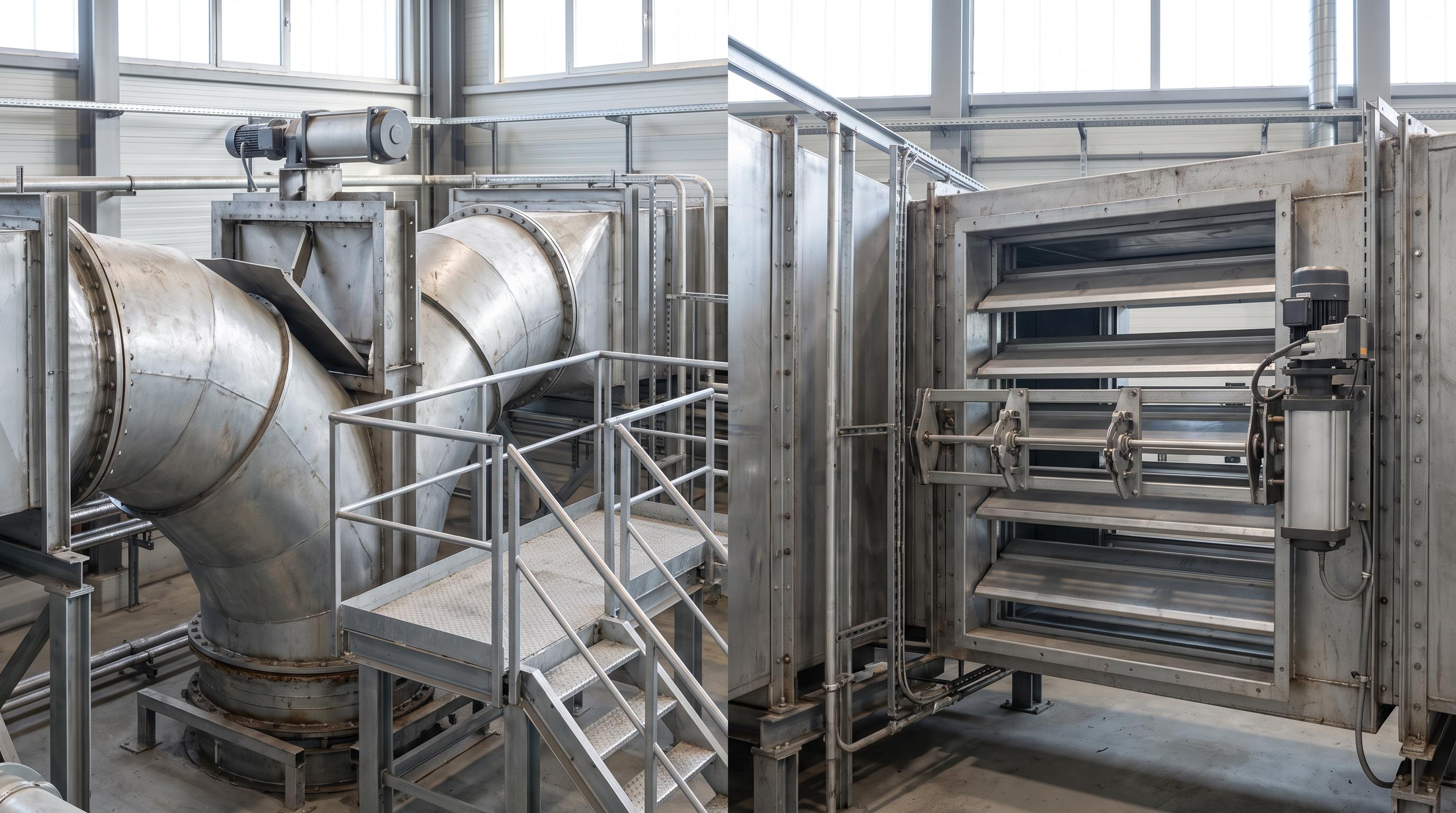
Choose a splitter damper when you need to divide or direct airflow from one duct into two branches, such as a Y- or T-junction. It is designed to keep airflow smooth while minimizing pressure loss.
Choose a louver damper when you need to control or adjust airflow within a single duct. Its multiple blades provide accurate airflow regulation for better process control.
Avoid using a splitter damper for airflow throttling. It is built for diversion, not control. Using it in the wrong application can create turbulence, cause blade vibration (flutter), and put extra stress on the actuator, leading to premature failure.
In industrial plants, the wrong damper at a key duct junction can hurt process efficiency fast. Both damper types handle air routing, so they often look similar. In practice, they behave very differently in airflow.
The choice is not only about duct size. It decides whether you get steady airflow or deal with pressure loss, blade flutter, and weak process control.
Let's keep this simple. Here is when to use a splitter damper or a louver damper, so you can improve airflow without overspending.
Side-by-Side Comparison
Operational Factor | Splitter Dampers | Louver Dampers |
Primary Function | Directing/Splitting Streams | Throttling/Modulating Flow |
Blade Configuration | Single internal pivot blade | Multiple synchronized blades |
Pressure Drop | Very Low (Streamlined transition) | Moderate to High (Blade profile resistance) |
Space Requirement | Requires extended Y/T duct footprint | Highly compact inline depth |
Particulate Handling | High tolerance for dust/ash | Moderate (Fines can pack in linkages) |
Flow Control Profile | Linear diversion between two paths | High-precision incremental throttling |
The Direct Aerodynamic Breakdown
Start with the duct layout. Then decide whether your main goal is flow diversion or flow throttling.
1. The Splitter Damper: The Y-Junction Specialist
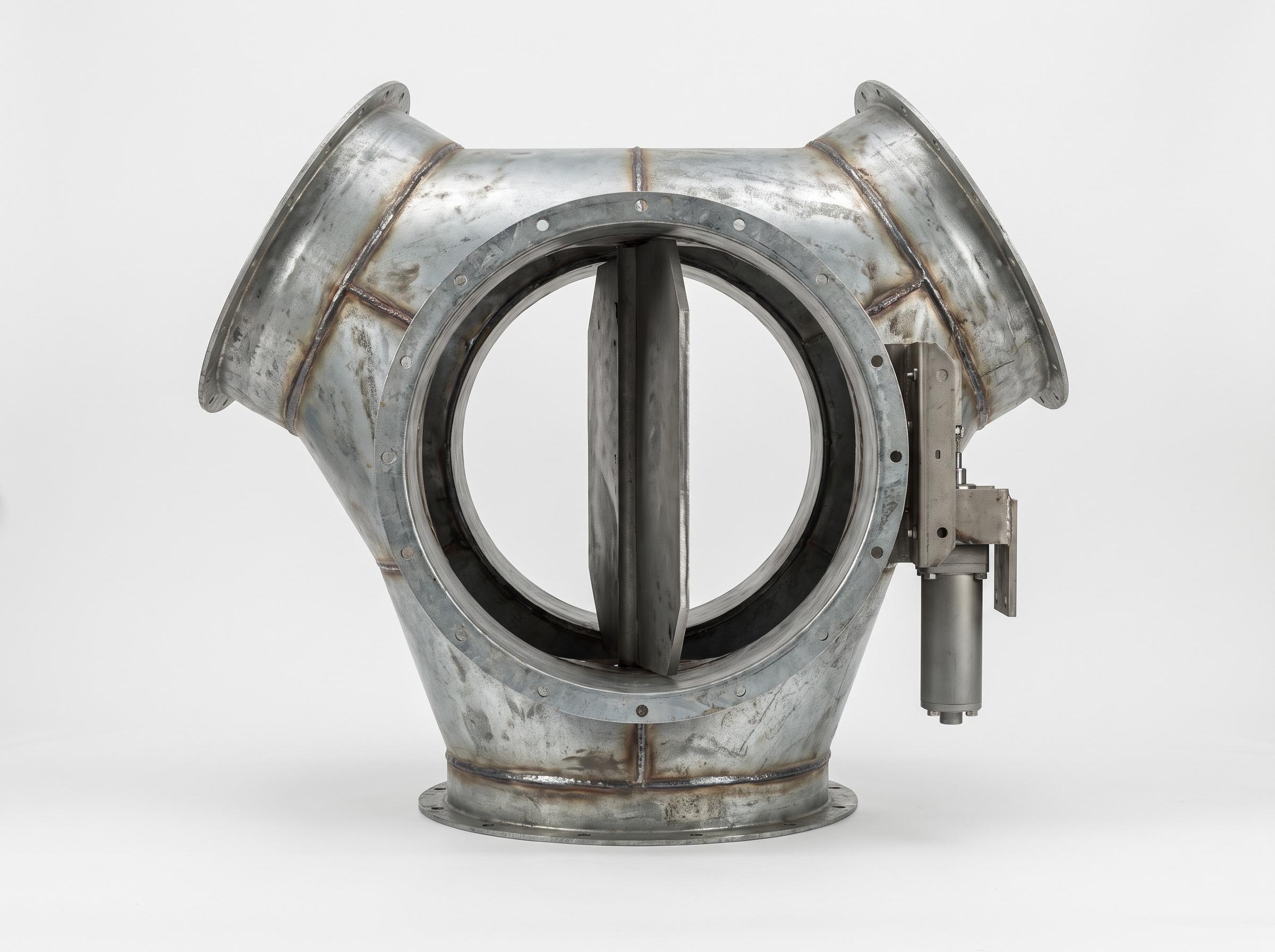
A splitter damper features a single heavy-duty plate blade anchored at a dynamic pivot point, typically installed inside a Y-duct or a T-junction.
Primary Duty: Proportional flow splitting or 100% path diversion.
Operating Profile: As the blade swings, it blocks one branch leg while simultaneously opening the other. It acts as a mechanical partition that guides the moving air mass with minimal systemic resistance.
The Advantage: Because the blade aligns with the split angle of the ductwork, it causes a very low pressure drop. It is also excellent when the gas stream carries light particulates, as there are no multi-blade tight clearances where fine ash or dust can pack and seize the mechanism.
2. The Louver Damper: The Precision Modulator
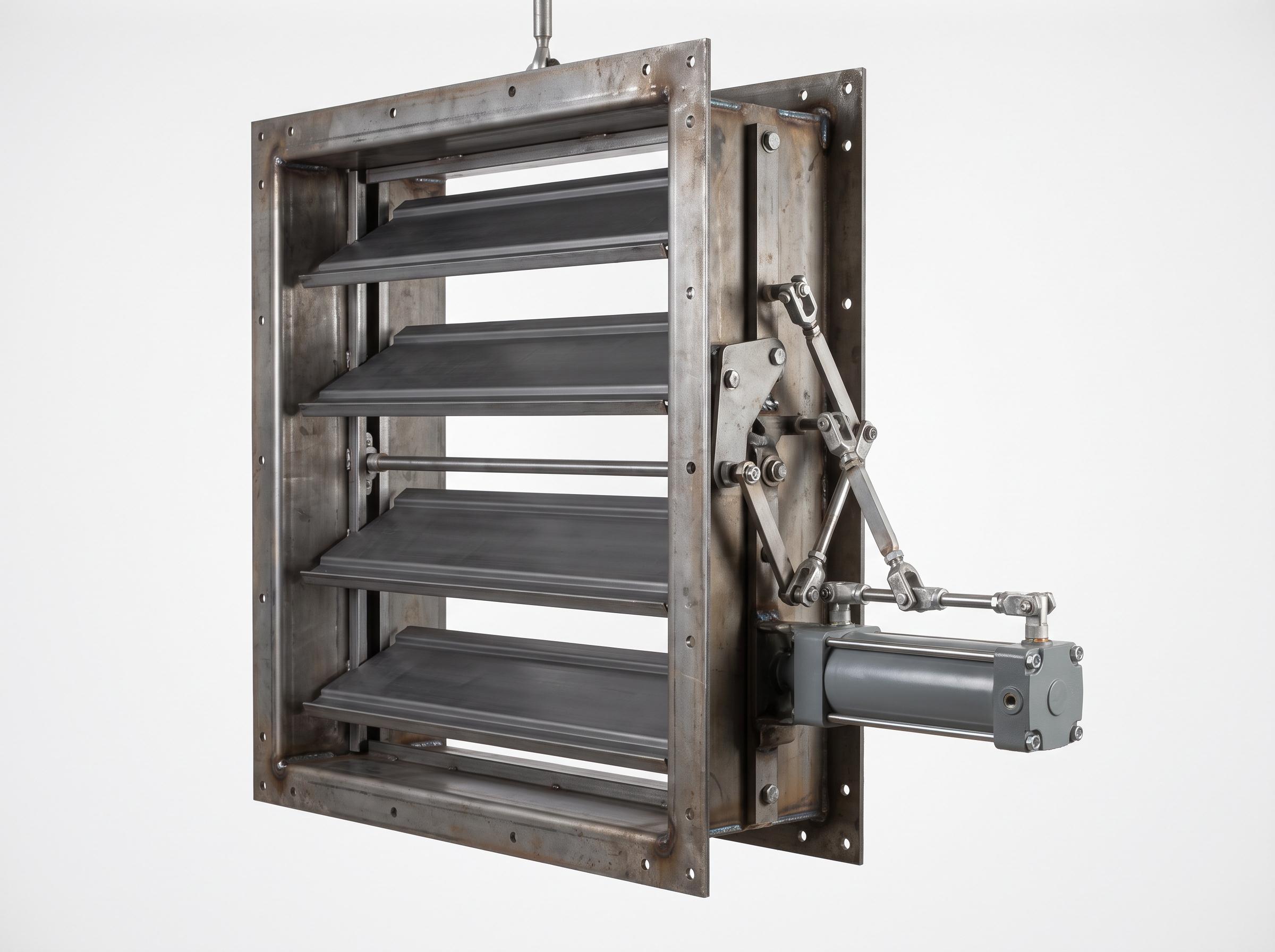
A louver damper uses a series of narrow, parallel blades that rotate collectively on individual shafts within a rectangular or square frame.
Primary Duty: Inline airflow throttling, backpressure control, and binary isolation.
Operating Profile: The blades can be configured in Opposed Flow (adjacent blades rotate in opposite directions for precise, linear flow modulation) or Parallel Flow (all blades rotate in the same direction for rapid opening/closing).
The Advantage: Unmatched throttling control. If your plant's PLC needs to continuously trim the airflow volume by small percentages matching a boiler draft or a dust collection fan curve the multi-blade distribution of a louver is the industry standard. For verification of performance and leak-rate testing on these assemblies, manufacturers refer to the rigorous benchmarking criteria established by the AMCA (Air Movement and Control Association) Damper Standards.
What matters in real plants: the decision is not just what each damper is called. The better question is what failure you are trying to prevent in service.
If the duty is branch diversion, a splitter damper usually wins because it keeps pressure drop low and follows the duct geometry.
If the duty is inline modulation, a louver damper usually wins because it gives finer control across the operating range.
In dusty or ash-laden service, fouling risk and linkage wear matter as much as airflow theory.
In high-velocity systems, blade loading and actuator torque can decide whether the installation stays stable or starts vibrating.
If you are evaluating a damper for a new duct layout or troubleshooting unstable airflow in an existing line, the spec sheet helps you compare duty fit, pressure drop behavior, blade arrangement, and actuator requirements before you finalize the selection.
System Spec Check: Balancing the Air and Material Mix
Before finalizing your duct layouts, keep these core processing components in mind to keep your system balanced:
High-Velocity & High-Temperature Exhaust
Route hot, particulate-heavy flue gas with the downstream exhaust path in mind, not just the damper body.
Check how the damper ties into the exhaust stack and whether a low-pressure-drop diversion path is more important than compact inline control.
In dual systems, confirm the routing also works with nearby equipment such as an industrial Screw Conveyor and the plant’s emissions-control requirements.
Fine Particulate Control
Fine powders and fly ash can migrate into external linkages and seize multi-part mechanisms.
That makes particulate tolerance a real selection factor, not a side note, especially when comparing single-blade diversion against multi-blade modulation.
If your plant is dealing with blade flutter, unstable draft control, dust-heavy airflow, or repeated actuator stress, the next step is to review the duty at the junction before locking in the damper type.
From the field: We once helped a biomass power plant with a control problem. The team had installed a single-blade splitter damper at a fan discharge outlet. They used it to control airflow into two combustion zones.
They tried to use the large splitter blade for inline throttling instead of simple diversion. At that gas velocity, strong vortices formed behind the blade. The turbulence caused heavy blade flutter. It damaged the actuator brackets and sent vibration through the duct line.
We fixed the line by locking the Y-junction with a fixed divider. Then we installed an opposed-blade louver damper downstream on each leg. The plant gained smooth control without structural vibration.
Final Takeaway
Choose a splitter damper when one airflow stream must be diverted between two branches with low pressure drop.
Choose a louver damper when one duct line needs throttling, backpressure control, or tighter shut-off.
Treat particulate loading and available space as real selection factors, not afterthoughts.
If a splitter damper is forced into inline throttling duty, expect instability, vibration, and actuator stress.
The right choice starts with duty first: diversion versus modulation, then pressure drop and dust conditions.
Make sure your air system works with the rest of the bulk handling line. Good balancing protects industrial Belt Conveyors from tracking problems caused by uneven material drop at Diverter Valve points.
Frequently Asked Questions (FAQ)
No standard industrial louver dampers typically do not deliver absolute bubble-tight isolation. The reason is simple: multiple moving blades need small operating clearances, so some leakage remains even in a well-built assembly.
If the duty is maintenance isolation or safety-critical shut-off, specify a tighter shut-off arrangement such as a double block and bleed design with seal air, or move to a dedicated heavy-duty isolation valve.
Choose opposed-blade louvers when you need stable, incremental modulation. They give a more controlled airflow profile across the operating range, which makes them the better fit for draft control and other duties that need fine trimming.
Choose parallel-blade louvers when the job is mainly fast opening and closing or when low resistance in the fully open position matters more than precise mid-range control.
Yes splitter dampers often need high actuator torque because one large blade takes the dynamic load of the incoming gas stream. The actuator has to move that full blade area reliably under velocity and pressure, not just rotate a small control element.
That is why torque sizing should be checked against blade area, pressure conditions, and operating frequency before final selection.
For most airslide and fluidizing-air duties, a louver-style modulating damper is the better fit because it can trim airflow inside a single line with better control. That makes it easier to hold the air volume needed for stable conveying without overfeeding the system.
The final choice still depends on pressure drop, dust loading, and how tightly the process needs airflow to stay within range. For related equipment selection, review the Dampers and Flow Control Valve range.