
When a Conveyor Needs a Retrofit, Not Another Repair

Vijay Baid
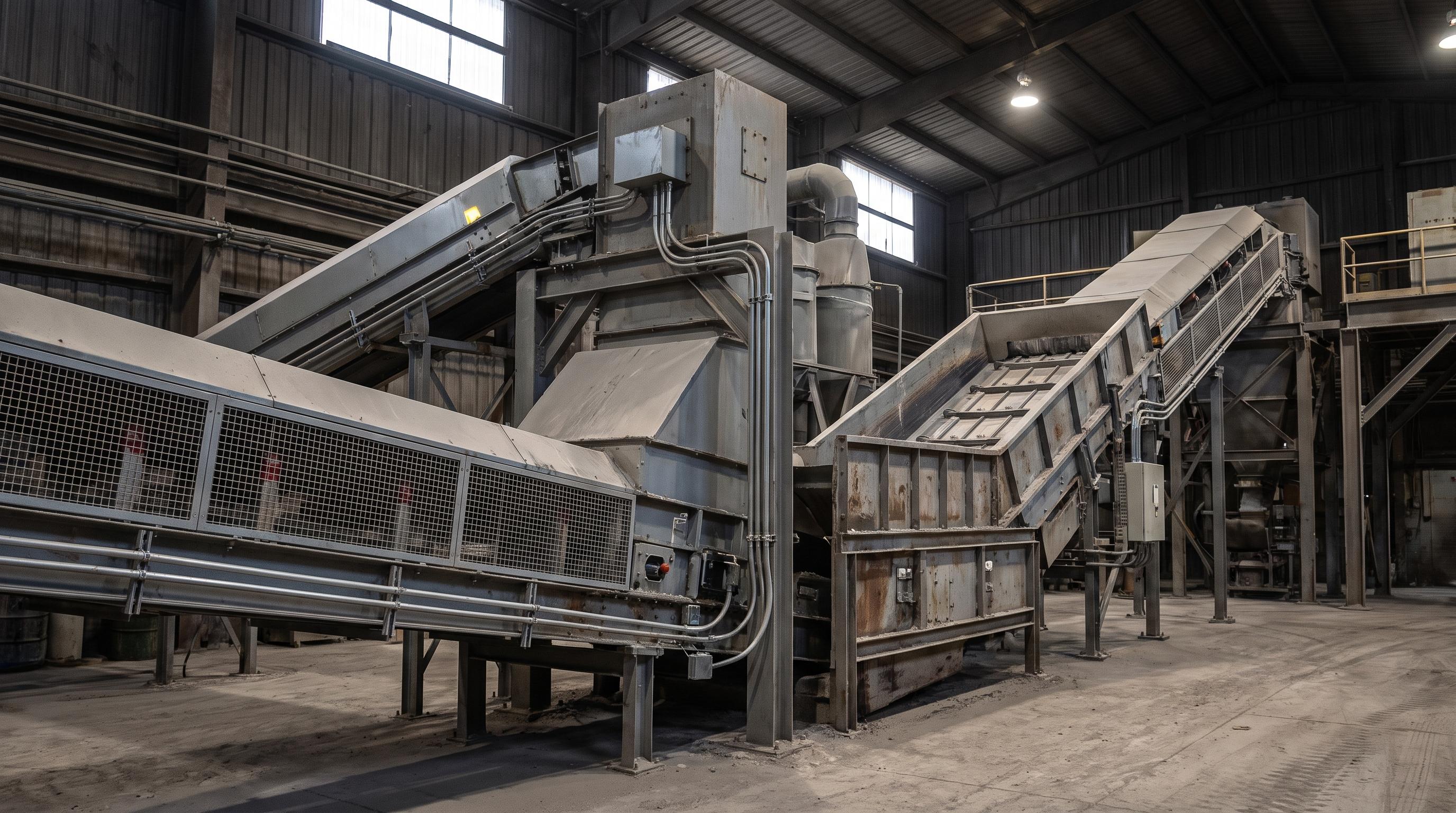
If you notice belt binding (the belt getting stuck or restricted) or low throughput (reduced material flow) after increasing plant capacity, it may be time for a retrofit. A targeted retrofit upgrades key components such as loading zones, drives, belt support, and transfer chutes. These upgrades improve long-term reliability and help the system meet current safety and engineering standards.
In high-tonnage bulk handling operations, keeping production moving is the daily priority. When a belt mistracks, a pulley bearing seizes, or a transfer chute plugs, the default response is almost always an emergency repair: re-weld the cracked plate, replace the destroyed roller, or slap a rubber patch over a worn hopper wall.
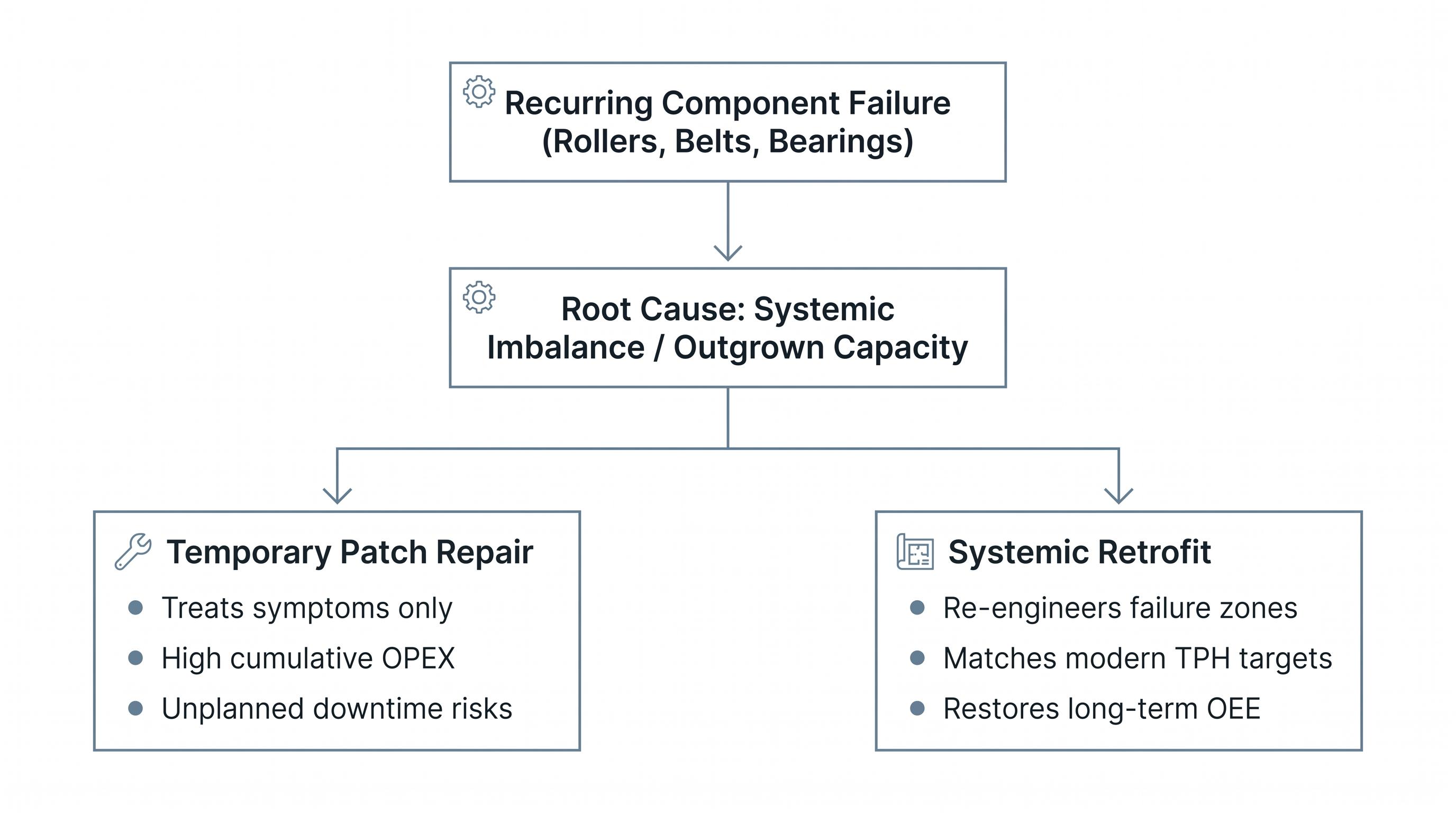
Quick fixes restore immediate operation, but they rarely solve why the failure happened. Over time, recurring repairs create an expensive cycle. Maintenance budgets get spent patching symptoms while overall equipment effectiveness (OEE) steadily declines.
Every system eventually reaches a tipping point where the cumulative cost of downtime, spare parts, and lost throughput exceeds the cost of a proper conveyor retrofit. This guide outlines the clearest operational signs that it is time to stop repairing and start modernizing.
5 Clear Signs You Need a Conveyor Retrofit
1. Chronic Spill and Fugitive Dust Around Transfers If crews spend hours each week cleaning spilled material or dust around transfer points, the design is no longer fit for the job. Replacing skirt rubber or sealing strips may help for a short time. But it will not fix poor drop height, high impact, or weak chute geometry. A loading-zone retrofit with modern impact beds and better skirt sealing can control spillage and dust for the long term.
2. Repeated Structural & Drive Component Fatigue
When motor breakers trip routinely, gearbox housings crack, or pulley shafts shear, the conveyor is running beyond its original duty cycle. This often follows plant upgrades that increase upstream throughput without upgrading the downstream hardware. A drive-train and structural retrofit raises motor horsepower, upgrades conveyor pulley class ratings, and reinforces support steelwork to handle current peak surge volumes.
Evaluating whether your system needs component updates, drive upgrades, or transfer chute redesigns?
3. Accelerated Belt Edge and Cover Wear Conveyor belts are a major operating cost in bulk plants. If the top cover wears out in months instead of years, or the edges keep getting damaged, the problem is usually poor alignment or off-center loading. Straightening an old frame often does not last. A retrofit with a stronger frame and self-centering conveyor idlers can restore stable belt tracking.
4. Severe Bottlenecks From Changed Material Properties Bulk material does not always behave the same way over time. Mine seams shift. Moisture levels change. Plants also change suppliers. A system built for dry, free-flowing material can struggle with sticky or wet fines. That can cause bridging, buildup, and hopper blockage. A chute retrofit with steeper valley angles, non-stick liners, or dynamic diverters can restore smooth flow. See these engineered transfer chutes built for those conditions.
5. Escalating Safety Risks and Compliance Flags
Aging conveyors with exposed pinch points, poor guarding, excessive fugitive dust, or high noise levels draw scrutiny during OSHA and MSHA inspections. Bolting aftermarket guards onto a worn structure is inefficient. A comprehensive retrofit integrates modern ergonomic guarding, emergency-stop controls, and enclosed dust suppression directly into the framework.
Need an engineering team to review bottlenecks, calculate load trajectories, or design a custom retrofit package? Speak with specialists who can assess your system and recommend the right path forward.
From the Field: A coastal grain export terminal had major delays on its main ship-loading conveyor. The belt was 1800 mm wide and originally ran at 3.2 m/s. To load vessels faster, the plant increased feeder rates by 35%. The problem was simple. The old system could not handle the extra volume. The transfer chute at the main junction tower kept plugging and spilling grain into the structure. Maintenance crews had to clear and repair the chute four times in one month. Each stop added overtime and delayed ship loading. Instead of patching the chute again and replacing more damaged drive belts, the plant approved a full transfer-point retrofit:
Redesigned the junction chute with curved hood-and-spoon geometry to control material velocity and eliminate plugging.
Replaced the drive pulley and motor package to raise belt speed to 4.2 m/s.
Retrofitted the loading zone with heavy-duty impact beds and a dust-tight skirt enclosure.
Results: Throughput rose 35 % with zero chute plugs. Spillage around the transfer tower dropped to zero. The retrofit paid for itself in five months through reduced vessel demurrage fees.
System Integration Across Retrofitted Conveyor Circuits
A good retrofit does not stop at one transfer point or one drive. If you upgrade only one section and ignore the rest of the circuit, the bottleneck often just moves downstream.
When you upgrade a loading zone or transfer chute, the rest of the system must handle the new material flow and capacity. In most plants, that means checking three connected areas:
Conveyor Structure & Drive Components
Higher throughput increases belt tension and impact loads. Reinforced belt conveyors paired with properly rated conveyor idlers and heavy-duty pulleys prevent the upgraded section from overloading the rest of the line.Feeding & Elevating Equipment
For steep inclines or tight vertical spaces, the original belt system may no longer be the best choice. High-capacity screw conveyors or low-power Air Slide Assemblies often provide cleaner, more reliable flow in these conditions.Material Control & Dust Management
Upstream isolation and downstream diversion become critical once capacity rises. Slide gates and knife/butterfly valves give reliable shut-off, while rotary airlocks and diverter valves maintain pressure seals and direct material cleanly without creating new dust or spillage points.
Final Key Takeaways
Repeated repairs on an aging conveyor drain time and money. They also limit plant capacity. If spillage, mistracking, fatigue, and chute plugging have become normal, the system likely needs more than another repair. A retrofit can solve the root cause. By upgrading transfer chutes, drives, and belt support, engineering teams can improve reliability, remove bottlenecks, and keep the plant safer and more compliant for years.
Frequently Asked Questions (FAQ)
When the same failures recur—structural fatigue, chronic spillage, drive trips, or accelerated belt wear—and cumulative downtime plus parts cost exceeds the investment in a targeted upgrade, a retrofit becomes the more economical choice.
Most loading-zone or transfer-chute retrofits can be completed during a planned outage of several days to two weeks, depending on scope. Full drive-train and structural upgrades may require longer coordinated shutdowns.
Yes. Modern designs incorporate proper guarding of pinch points, emergency stops, dust containment, and safer access—directly addressing common inspection findings.
Absolutely. Targeted upgrades such as impact beds and skirts, new pulleys and drives, or redesigned chutes often deliver most of the reliability and capacity gains without replacing the entire conveyor.
Compare current annual costs of unplanned downtime, overtime, spare parts, and lost throughput against the capital cost of the retrofit. Many projects, like the grain terminal example, pay back in under six months through higher effective capacity and lower demurrage or production losses.